J. Stuart Blackton and Funny Faces
Chalk drawings that moved on film. In 1906 J. Stuart Blackton made Humorous Phases of Funny Faces, often called the first animated film on standard film. How a cartoonist became a film pioneer.
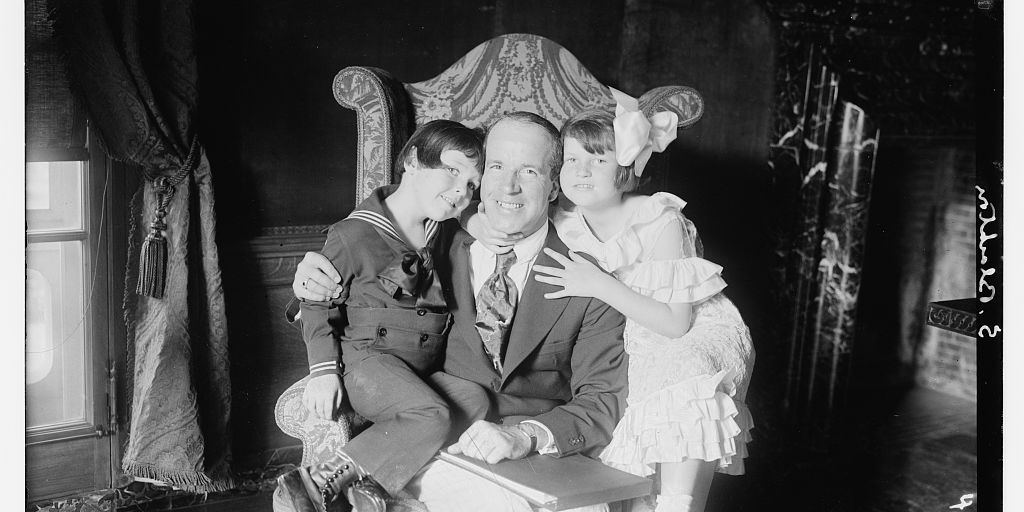
J. Stuart Blackton with his children: The Library of Congress, Public domain
The lightning sketch artist
James Stuart Blackton was born in Sheffield, England, and moved to the United States as a child. He worked as a newspaper illustrator and performed lightning sketch acts in vaudeville, drawing faces at high speed while the audience watched. When he went to interview Thomas Edison for a newspaper, he was filmed doing one of his sketches, and he caught the movie bug.
Vitagraph
In 1897 Blackton and his partner Albert E. Smith founded the Vitagraph company in New York, which grew into one of the most important early American film studios. They made comedies, dramas and trick films, and Blackton loved experimenting with what the camera could do.
Drawings that come alive
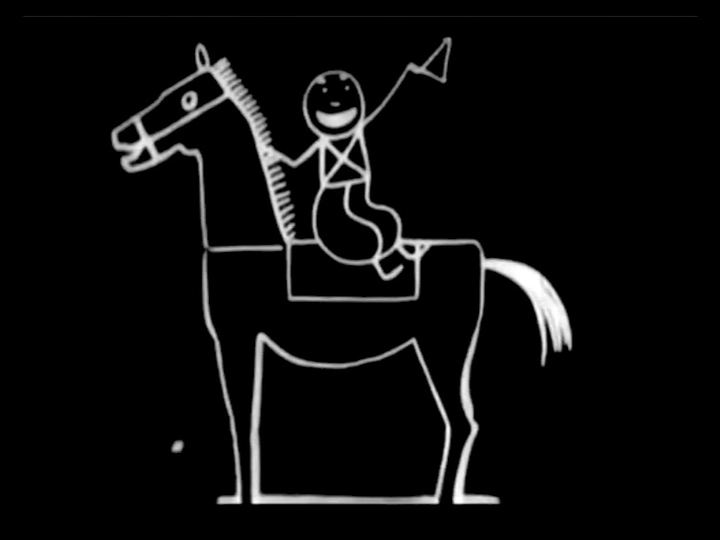
In The Enchanted Drawing (1900) Blackton draws a man's face on an easel, and with simple stop-camera tricks the face changes expression and real objects appear from the paper. In Humorous Phases of Funny Faces (1906) he went further: he drew faces in chalk on a blackboard and filmed them a frame at a time, changing the drawing slightly between exposures, so the faces rolled their eyes and blew smoke. Some sections used cut-out paper pieces moved by hand, an early form of cut-out animation.
Objects that move themselves
Blackton's The Haunted Hotel (1907) used stop-motion to make objects, food and furniture move by themselves, and it impressed audiences in Europe as well as America. Artists such as Emile Cohl studied these effects and pushed animation further. Read our Fantasmagorie page for Cohl's all-drawn film of 1908.
Why he matters
Blackton was a showman more than a full-time animator, and he soon moved on to live-action features. But his films showed that drawings could be photographed frame by frame to create motion on ordinary film stock, the basic idea behind every cartoon since. Because they were made before 1929, his films are in the public domain and can be watched freely in many archives.
Watch and learn
Humorous Phases of Funny Faces is only a few minutes long, and archives such as the Library of Congress hold early Vitagraph films. Watch it once for fun, then again frame by frame: you can spot where Blackton erased parts of the chalk drawing, where he swapped in paper cut-outs and where the camera simply stopped. It is a perfect first lesson in how animation tricks the eye.
- J. Stuart Blackton with his children: The Library of Congress, Public domain
Text written by Fantastic Cartoon.