Emile Reynaud and the Theatre Optique
Projected cartoons before cinema. Years before the Lumiere brothers, Emile Reynaud projected hand-painted animated stories for paying crowds in Paris. The first true cartoon shows.
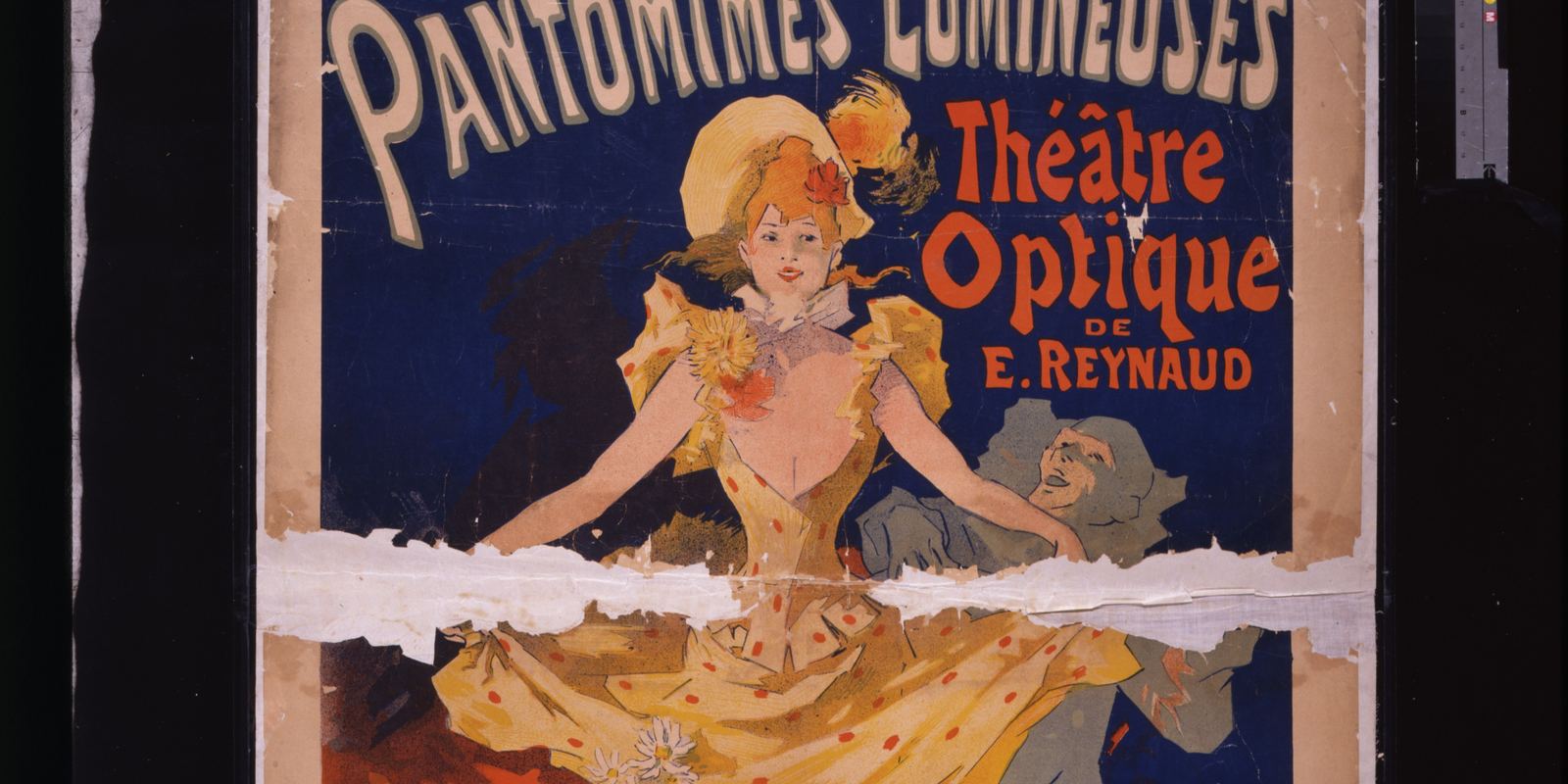
Poster for the Pantomimes Lumineuses, 1892: Chéret, Jules, 1836-1932, artist; Reynaud, Charles Emile, 1844-1918.; Paulin, Ga, Public domain
A teacher who loved images
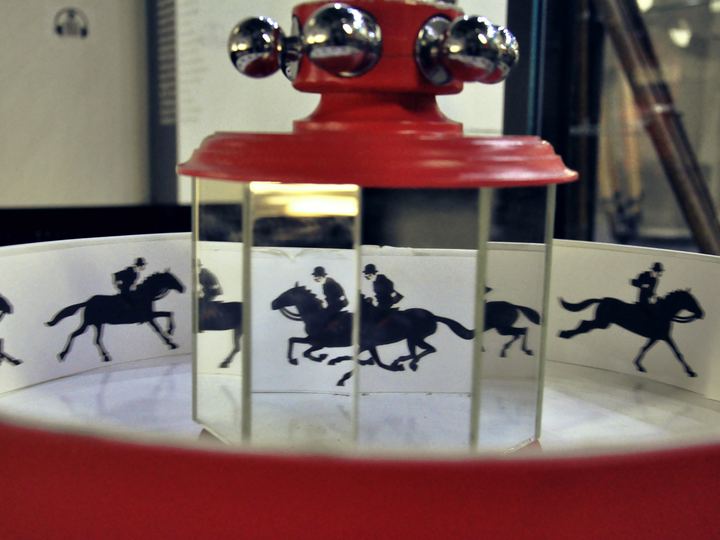
Charles-Emile Reynaud was a French science teacher with a passion for optical devices. In 1877 he patented the praxinoscope, an improvement on the spinning zoetrope that used a ring of mirrors in the centre, so viewers saw a bright, steady moving picture instead of flickering slits. It became a popular toy, and he kept improving it, adding a little theatre with a painted backdrop.
The Theatre Optique
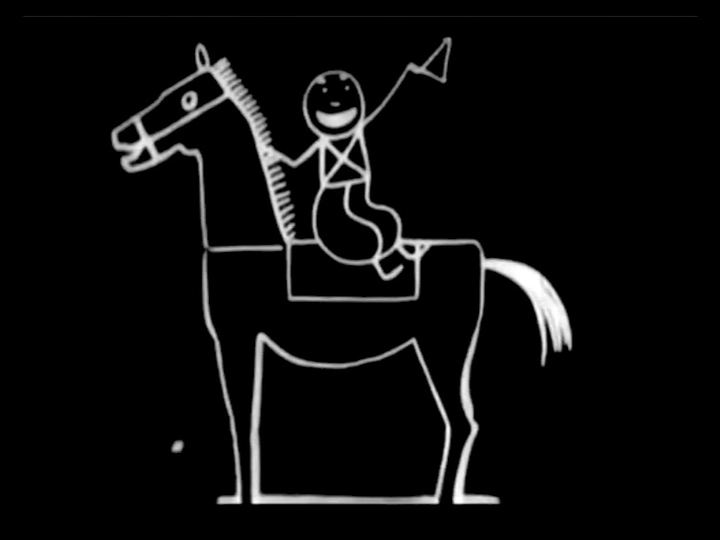
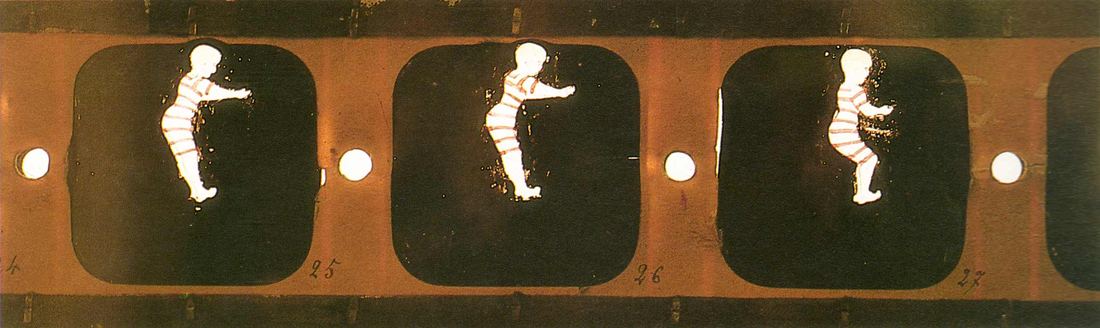
Reynaud's big idea was to project moving drawings for an audience. His Theatre Optique, patented in 1888, used a long flexible band of hundreds of individually painted pictures on gelatine squares, wound between two reels. Perforations along the band kept it in place, an idea later used in film. The moving characters were projected onto a screen over a separately projected background.
Luminous pantomimes
From 28 October 1892 Reynaud presented his Pantomimes Lumineuses at the Musee Grevin wax museum in Paris. Pauvre Pierrot, Un bon bock and Le Clown et ses chiens each lasted several minutes, with music and sound effects performed live. Reynaud worked the bands by hand, so he could slow down, speed up or repeat moments for comic effect. Hundreds of thousands of tickets were sold over the following years.
Overtaken by film
Photographic cinema arrived in 1895 and soon drew the crowds away. Reynaud tried combining photography with his methods, but the hand-painted shows were slow and costly to make. His performances ended in 1900, and in his later years, in despair, he is said to have thrown most of his bands into the Seine. Only a couple survive, and he died in 1918 with little recognition.
Remembered at last
Historians now see Reynaud as the father of projected animation. In 2002 ASIFA, the international animated film association, chose 28 October, the anniversary of his first show, as International Animation Day. For the toys that came before him, read our optical toys page, and see the animation timeline for what came next.
See it today
Copies of Pauvre Pierrot survive and have been restored, so you can watch Reynaud's work in film archives and online collections. Museums such as the Cinematheque francaise in Paris display praxinoscopes and related devices, and replica praxinoscopes are still made as educational toys. Watching one spin shows how simple mirrors created one of the first true moving-picture shows.
- Poster for the Pantomimes Lumineuses, 1892: Chéret, Jules, 1836-1932, artist; Reynaud, Charles Emile, 1844-1918.; Paulin, Ga, Public domain
- A Theatre Optique picture band: Émile Reynaud, Public domain
Text written by Fantastic Cartoon.
← How a Cartoon Episode Is MadeJ. Stuart Blackton and Funny Faces →