Optical Toys Before Film
Spinning discs that made pictures move. Before cinema, Victorian families watched drawings dance in spinning discs and drums. How the phenakistiscope, zoetrope and praxinoscope worked.
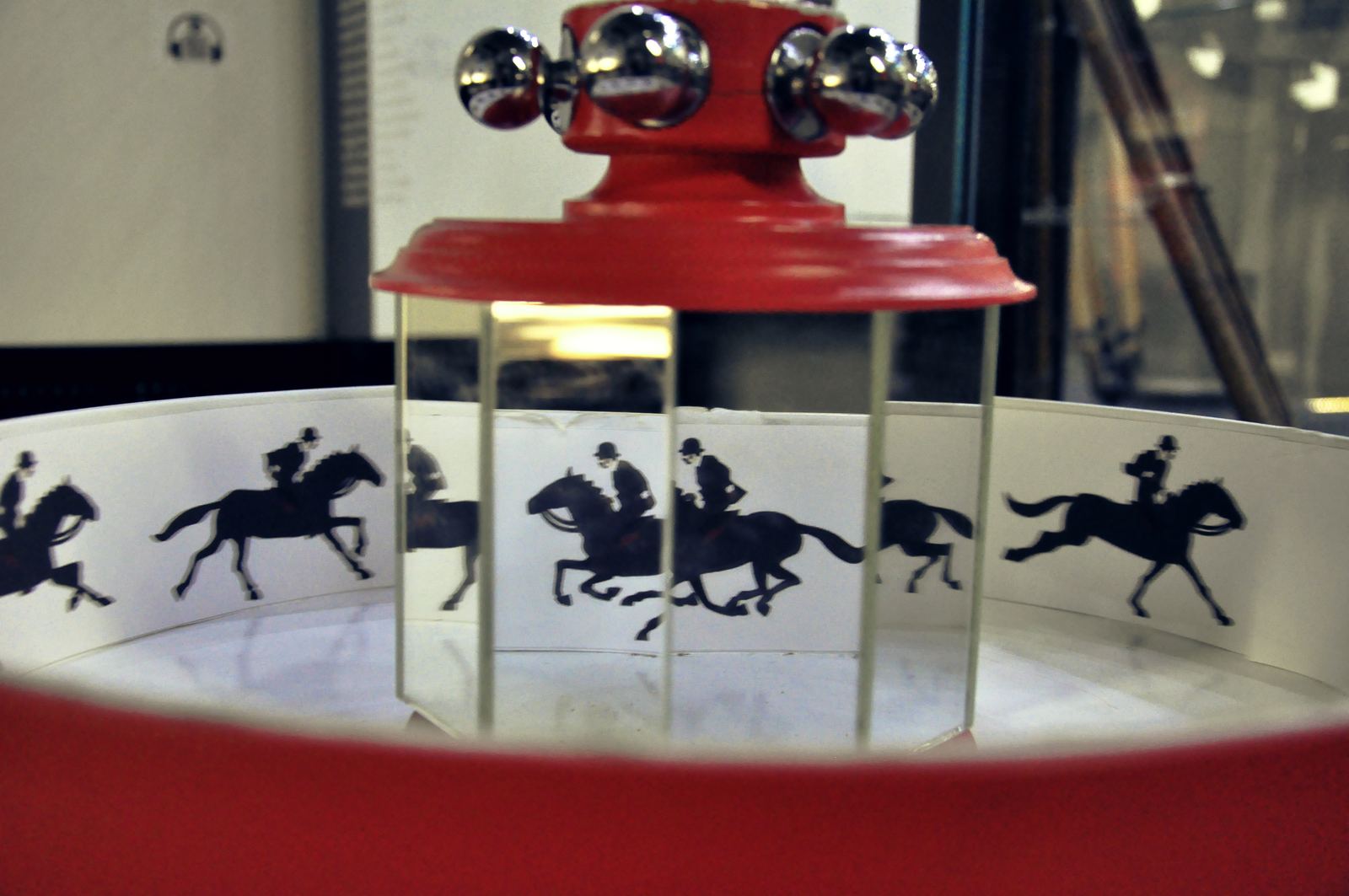
A praxinoscope in action: Gerarus, CC BY 4.0
A disc that fooled the eye
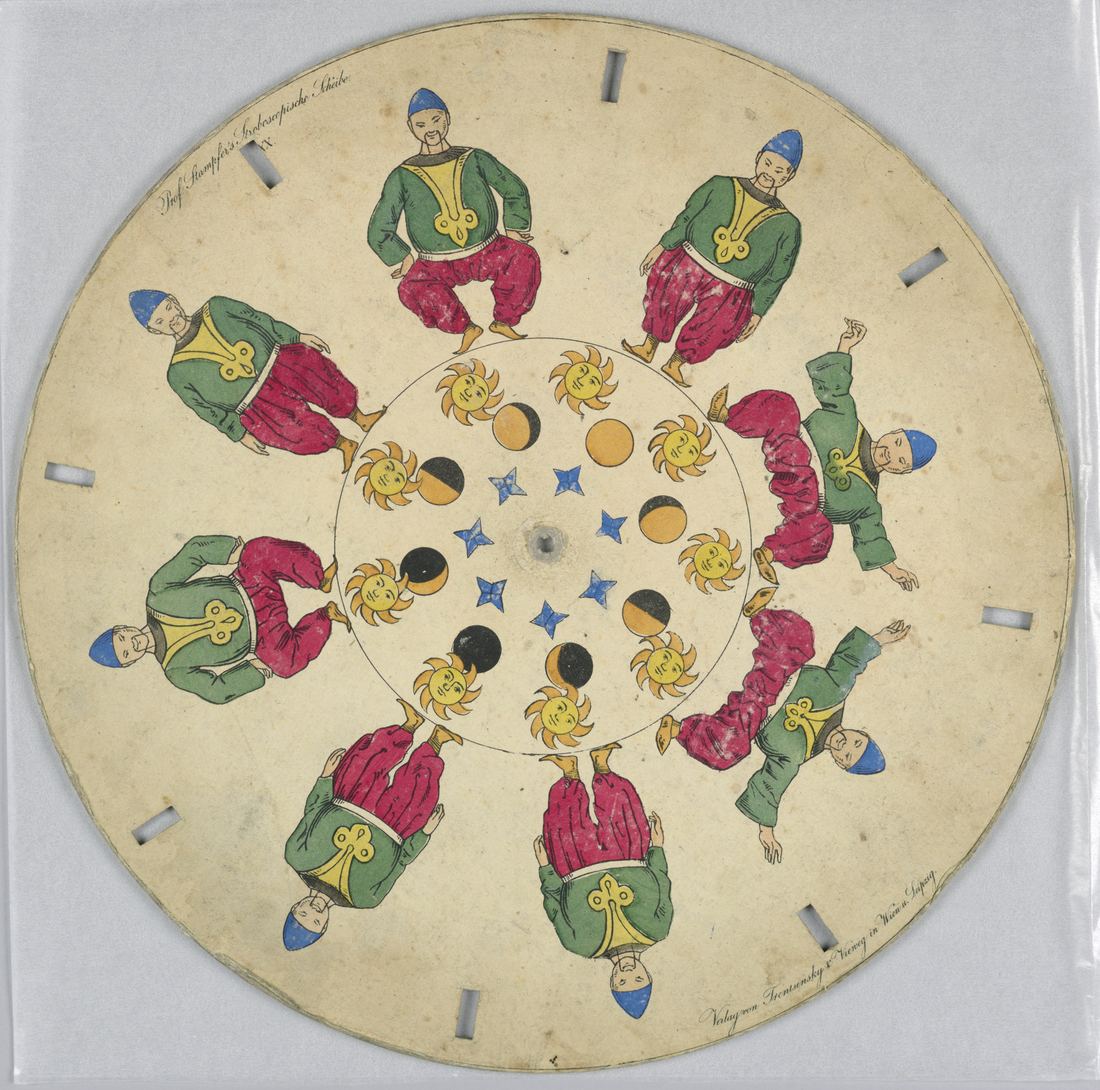
In January 1833 the Belgian scientist Joseph Plateau described a simple trick. Draw a figure in slightly different poses around a cardboard disc, cut slits between them, spin it in front of a mirror and look through the slits. The figure seems to move. Shops in Paris and London were soon selling versions under names like phénakisticope, which roughly means deceiving the eye.
The slits are the clever part. They hide the blur between pictures, so the brain sees a quick series of still poses and fills in the motion. Every film and cartoon since then relies on that same effect.
Drums and mirrors
In 1834 the British mathematician William Horner suggested putting the pictures inside a drum instead. His idea, later sold as the zoetrope or wheel of life, became a hit parlour toy from the 1860s. Several people could watch at once, and paper strips could be swapped to show new loops such as jugglers, acrobats or a dog chasing a ball.
In 1877 the French inventor Charles-Émile Reynaud replaced the slits with a ring of mirrors in the middle of the drum. His praxinoscope gave a brighter, steadier picture, and he soon added versions with little theatre scenes as backdrops.
The first cartoon shows
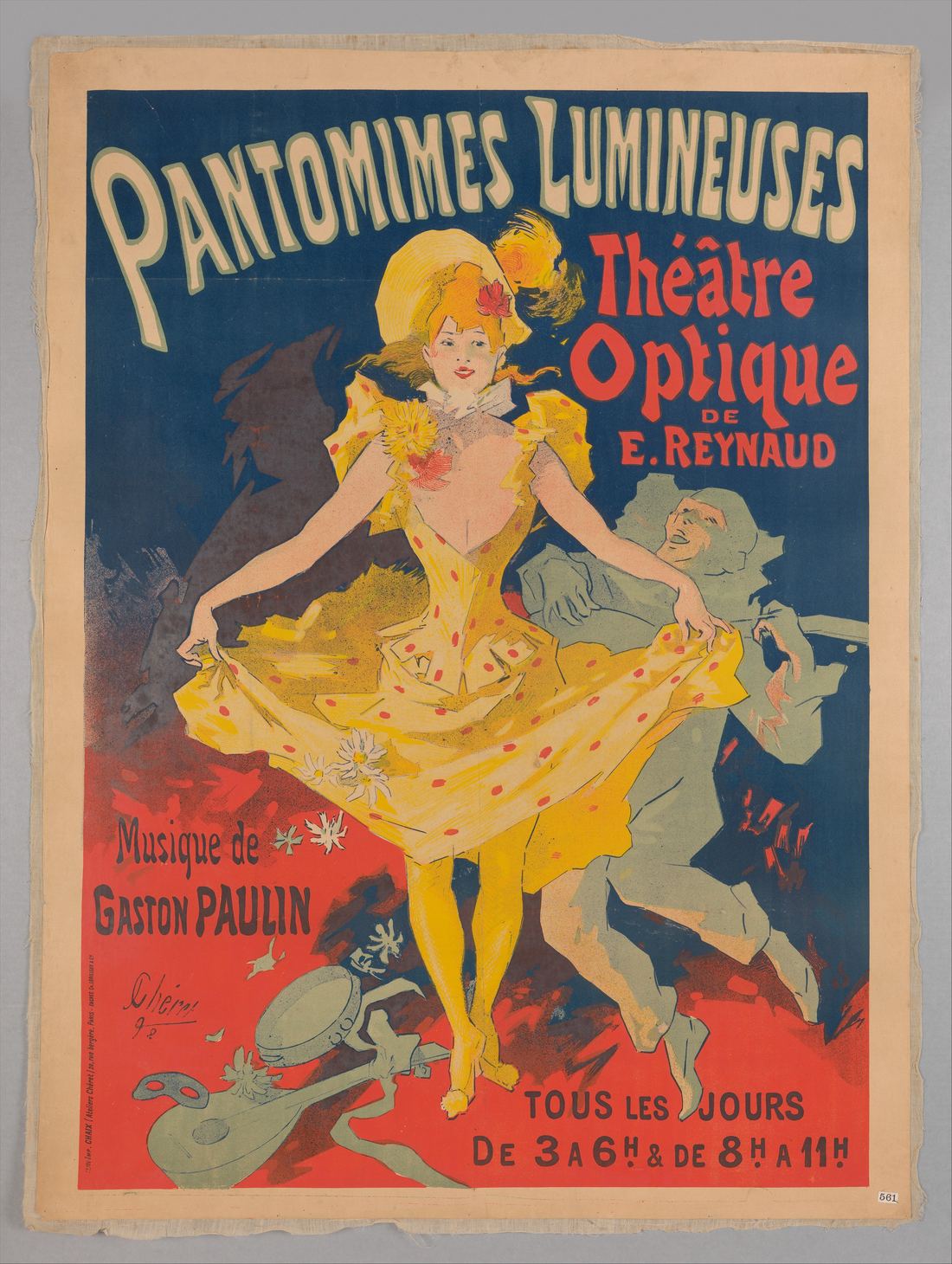
Reynaud kept going. His Théâtre Optique, developed in 1888, used a long band of hand-painted pictures that could be projected on a screen. From 1892 he presented Pantomimes Lumineuses at the Musée Grévin in Paris, short animated stories with music, years before most people had seen a motion picture.
These shows were painted directly onto the band by hand, frame by frame, which made them beautiful but slow to produce. Photography based cinema soon overtook them, and most of Reynaud's bands did not survive.
Why they still matter
Optical toys taught animators the basic rules they still use: break a movement into stages, keep the drawings consistent and repeat them in a loop. Animation students today often build a zoetrope or flip book as a first exercise, because it shows exactly how a few drawings become movement.
Make your own at home
You can rebuild the idea with paper and a pencil. Cut a strip of card, draw a simple action in eight to twelve stages, such as a ball bouncing or a stick figure waving, and tape it inside a short tube with slits cut above the pictures. Spin the tube and look through the slits.
A flip book works the same way without any slits. Draw on the corner of a notebook, changing the picture a little on each page, then flick through. It is the quickest way to feel how timing changes a movement.
- A praxinoscope in action: Gerarus, CC BY 4.0
- Phenakistiscope disc, about 1835: Unknown artistUnknown artist, Public domain
- Reynaud's 1892 show poster: Jules Chéret, CC0
Text written by Fantastic Cartoon.
← How a Cartoon Episode Is MadeFantasmagorie and Émile Cohl →