Gertie the Dinosaur
The first cartoon star with personality. Winsor McCay's Gertie the Dinosaur (1914) gave a cartoon real personality. How it was made, how it was performed live, and why it still matters.
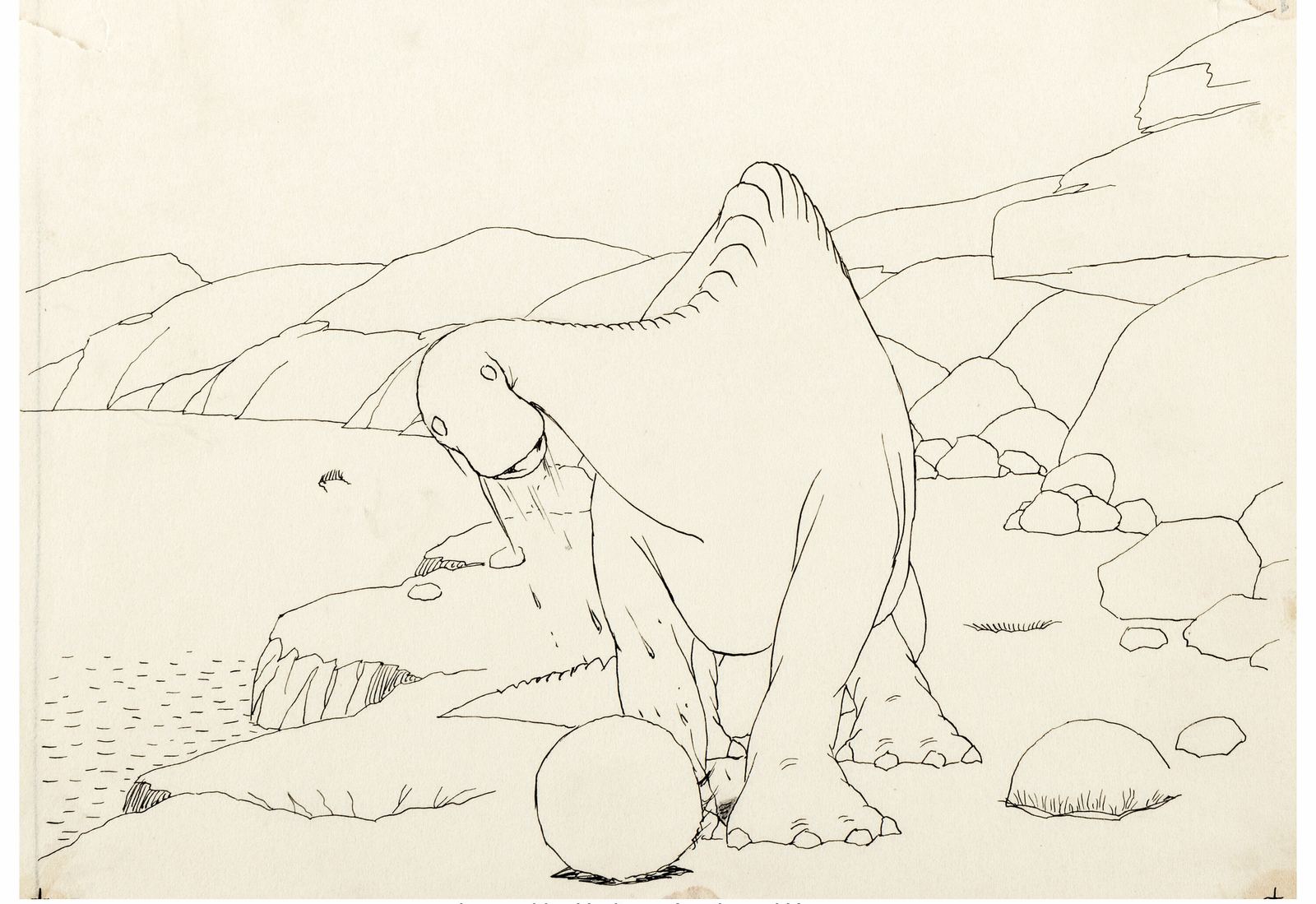
Original drawing, 1914: Winsor McCay, Public domain
A cartoonist on stage
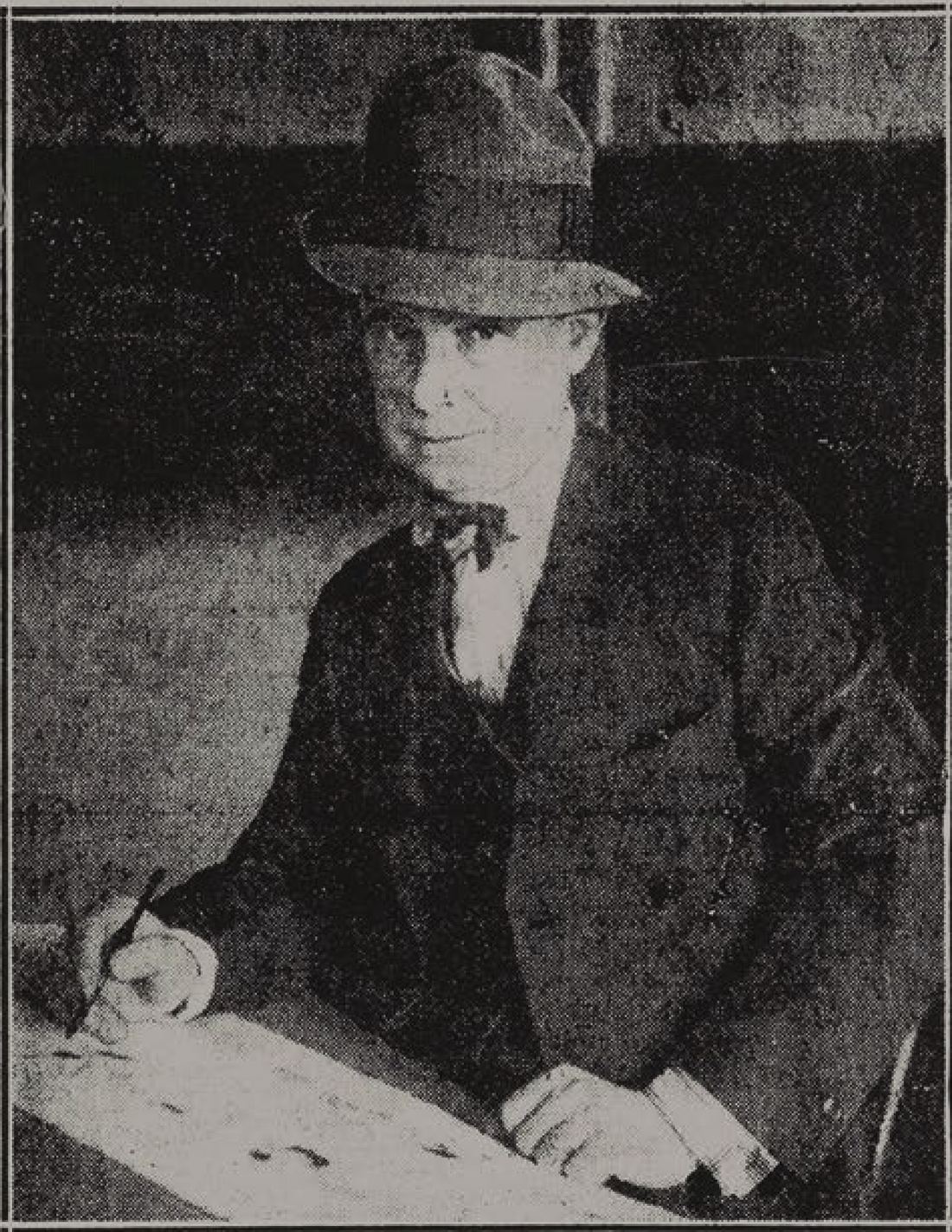
Winsor McCay was a star newspaper cartoonist, famous for the comic strip Little Nemo. He also toured the vaudeville circuit, drawing pictures live in front of audiences. After two earlier films, Little Nemo in 1911 and How a Mosquito Operates in 1912, critics said his animation was so smooth he must have traced photographs. So he picked a creature no camera could ever have filmed: a dinosaur.
Gertie made her first appearance on 8 February 1914 at the Palace Theater in Chicago. McCay stood beside the screen with a whip, gave her commands, and the cartoon appeared to obey. At the end he seemed to step into the picture and ride away on her back.
Drawing every frame
Before cels existed, everything in each frame had to be drawn on a single sheet of paper: the dinosaur, the rocks, the lake and the trees. The film's own introduction boasts of 10,000 drawings. McCay drew Gertie himself, and an assistant traced the background again and again.
To keep it manageable, McCay used ideas that became industry standards. He drew key poses first and filled in the drawings between them. He put registration marks on the corners so the pictures did not jitter, and he reused cycles of drawings for repeated actions such as breathing.
Personality on paper
What made Gertie special was not just the technique. She was shy, playful and a bit stubborn. She cried when scolded and played rough with a passing mammoth. Earlier animated films were mostly trick films, but audiences felt they knew Gertie, and that idea of a cartoon character with feelings shaped everything that followed.
For the theatrical release McCay added a live-action opening, since his employer had limited his stage tours.
A lasting influence
McCay refused to patent his methods, and animators such as the Fleischer brothers, Otto Messmer, Walter Lantz and Walt Disney grew up admiring his work. In 1991 the US Library of Congress added Gertie to the National Film Registry. About 400 of the original drawings survive, and in 2018 animators rebuilt his stage act for the Annecy festival using that art.
How to spot McCay's tricks
When you watch Gertie today, look at her breathing. Her body rises and falls in a smooth, repeating loop, an early example of a cycle of drawings reused to save time. Watch the background rocks too. Because they were traced again for every frame, they shimmer slightly, a reminder that nothing in the picture was held still.
That gentle wobble is part of the charm, and it shows why the cel, invented the same year, was such a big step.
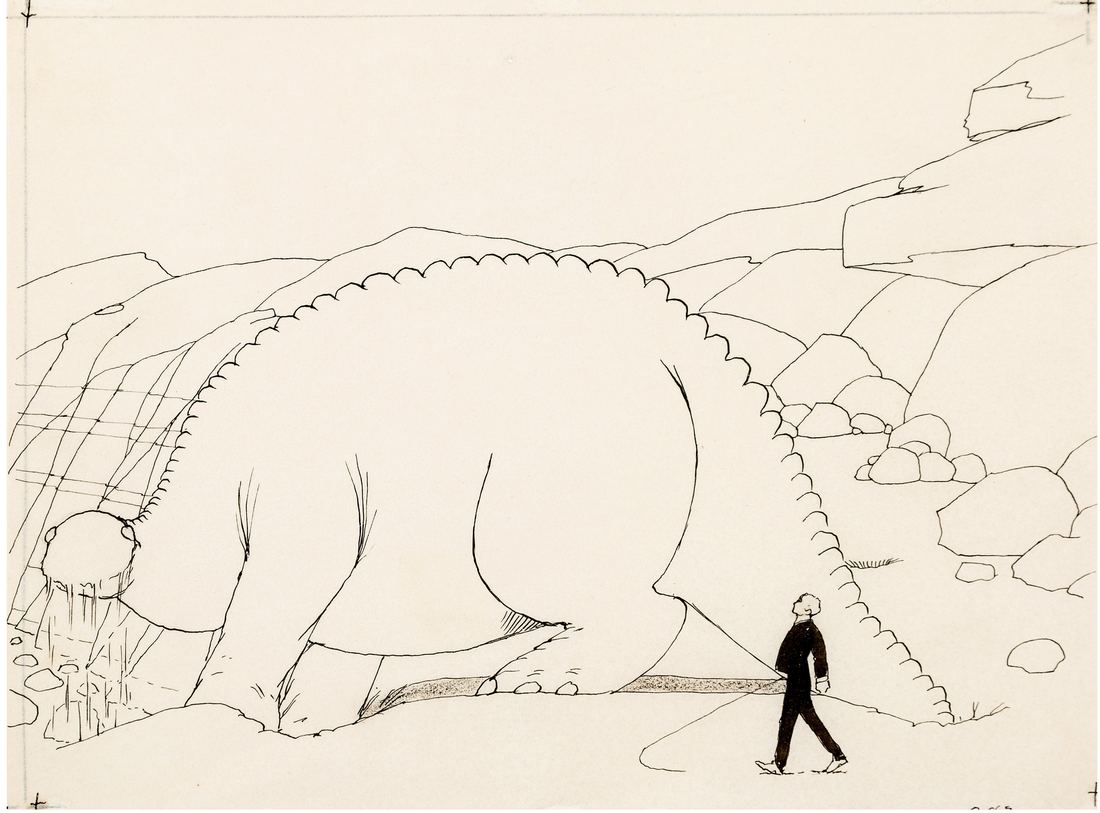
- Original drawing, 1914: Winsor McCay, Public domain
- McCay and Gertie on paper: Winsor McCay, Public domain
- Winsor McCay in 1926: Herald Tribune Office, 1926, Public domain
Text written by Fantastic Cartoon.