Voice Acting in Animation
The voices behind the characters. How cartoon voices are cast and recorded, why American studios record first, and the legends from Mel Blanc to June Foray who shaped the craft.
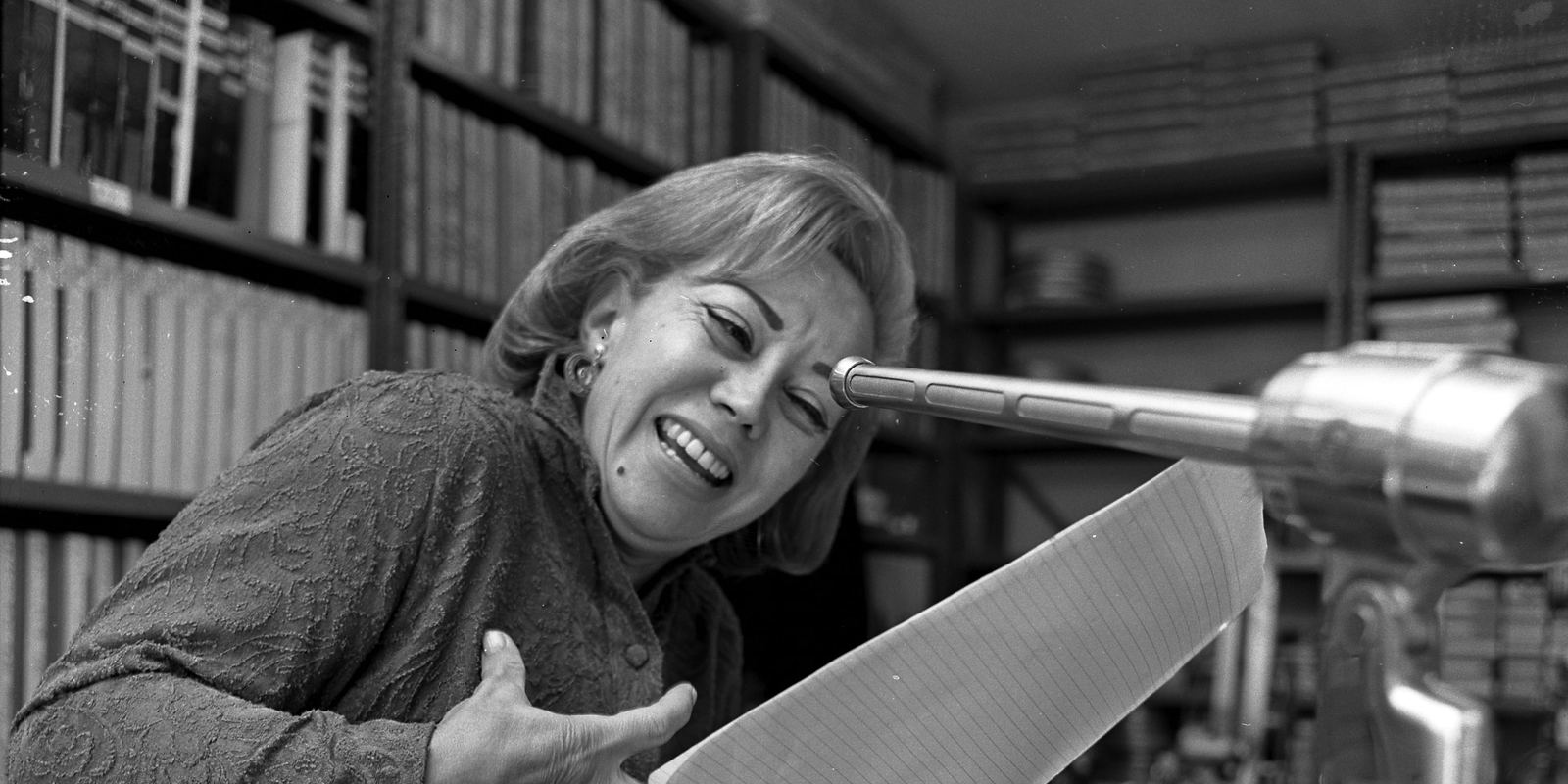
June Foray at an audition, 1965: Mary Frampton, Los Angeles Times, CC BY 4.0
Voices come first
In most American animation the actors record their lines before any animation is done. Animators then listen to the recordings and match every mouth shape, gesture and pause to the performance. Many studios film the voice sessions too, so animators can borrow the actors' real expressions. In Japan, anime voices are more often recorded after the animation is finished, a process known as afureko, from the English after-recording.
In the booth
A session usually takes place in a soundproof booth with the director, a recording engineer and sometimes the writer listening. Actors perform the same line many ways, with different emotions and speeds, so the director has choices. Shouting, crying and creature noises can be exhausting, so sessions are planned carefully to protect voices.
Mel Blanc
Mel Blanc, known as the man of a thousand voices, joined the Warner Bros. cartoon studio in 1936 and voiced Bugs Bunny, Daffy Duck, Porky Pig, Tweety, Sylvester and many more. He became one of the first cartoon voice actors to receive on-screen credit. Bugs Bunny's famous greeting is linked to his performance.
June Foray
June Foray voiced Rocky the Flying Squirrel and Natasha in The Rocky and Bullwinkle Show, Granny in Warner Bros. cartoons and hundreds of other characters across seven decades. She also campaigned for animation as an art, helping to establish ASIFA-Hollywood and the Annie Awards, which now present the June Foray Award in her honor. She worked into her nineties.
Today's voice actors
Modern animation uses both specialist voice actors and film stars. Celebrity casting grew in the 1990s, but many beloved characters still come from performers who mainly work in voice, video games and dubbing. Our animators A to Z directory lists more voice legends, and the glossary explains terms like lip sync and scratch track.
How to start in voice acting
Most voice actors start with acting training, because the job is acting with the voice alone. Practice reading out loud, record yourself and listen back, and learn to keep a character's voice consistent for long sessions. Many professionals build a demo reel of short clips showing their range, and take classes in improvisation, which helps when directors ask for a dozen different takes. Protecting the voice with water, rest and warm-ups matters as much as talent.
Did you know? Some voice actors play several characters in the same scene, recording each one separately and talking to themselves.
- June Foray at an audition, 1965: Mary Frampton, Los Angeles Times, CC BY 4.0
Text written by Fantastic Cartoon.
← Ray HarryhausenAnnecy International Animation Film Festival →