Rotoscoping
Tracing real movement into animation. Rotoscoping means tracing live-action footage frame by frame. Invented by Max Fleischer in the 1910s, it is still used in animation and visual effects.
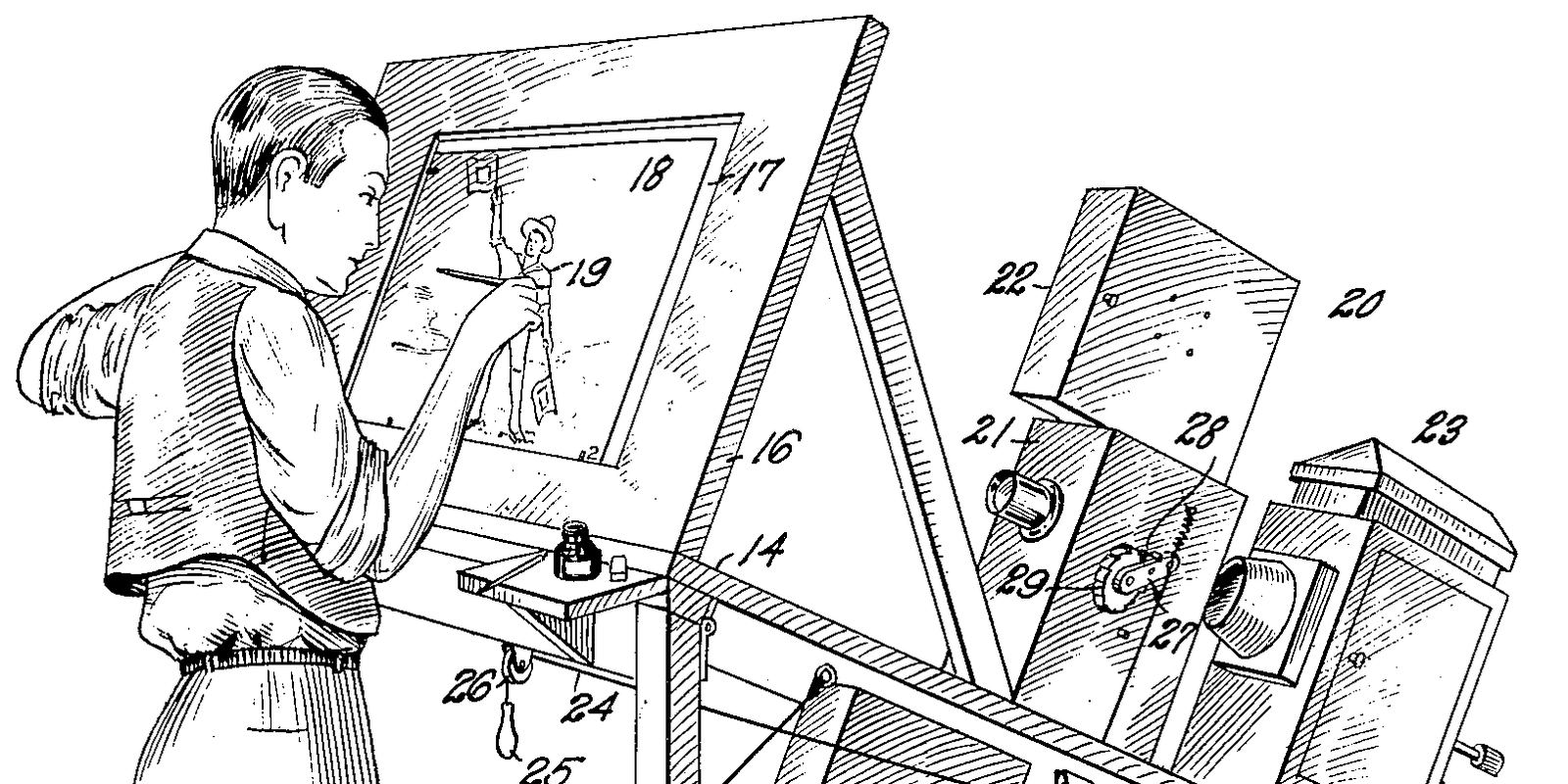
From the 1917 rotoscope patent: Patent by Max Fleischer, artist Unknown author cropped/retouched b, Public domain
How the original rotoscope worked
Max Fleischer's device projected one frame of live-action film at a time from behind or beneath a sheet of glass on a drawing table. The animator placed paper over the glass, traced the figure, then advanced the film to the next frame and repeated. The result was movement with the natural timing and weight of a real person, which was very hard to achieve by imagination alone.
Reference, not just tracing
Many studios used live-action reference without tracing it directly. Animators filmed actors performing a scene, studied the footage frame by frame and then drew their own version, exaggerating or simplifying where needed. Disney used this approach for human characters in early features, because realistic human motion was difficult to animate convincingly.
Famous rotoscoped work
Ralph Bakshi used rotoscoping widely in his 1970s and 1980s features, and the music video for a-ha's Take On Me (1985) mixed pencil-sketch rotoscoping with live action. Director Richard Linklater's Waking Life (2001) and A Scanner Darkly (2006) were filmed with actors and then painted over with custom software called Rotoshop, giving a dreamy, floating look.
Rotoscoping in visual effects
In modern visual effects, rotoscoping, often shortened to roto, has a second meaning: drawing shapes around actors or objects frame by frame so they can be separated from the background. Roto artists might cut out a stunt performer to place them in a new environment or to remove safety wires. It is detailed, time-consuming work done in compositing software.
Try it yourself
You can try a simple version at home. Film a friend jumping, pause on each frame on a tablet, place thin paper over the screen and trace the outline. Flip through your drawings to see the jump come alive. Our make-your-own-animation page has step-by-step beginner lessons, and the Fleischer Studios page tells the inventor's story.
Rotoscope or not?
Rotoscoping is a tool, not a shortcut. Traced movement can look floaty or stiff if it is copied too exactly, because real footage lacks the exaggeration that makes animation feel alive. Skilled animators usually push poses further, simplify details and adjust timing after tracing. Watching a rotoscoped scene next to its live-action source is a great way to learn what animation adds to reality.
Did you know? The rotoscope patent drawing pictured on this page is from 1917, and because it was published so long ago, it is in the public domain.
- From the 1917 rotoscope patent: Patent by Max Fleischer, artist Unknown author cropped/retouched b, Public domain
Text written by Fantastic Cartoon.
← Max Fleischer and Fleischer StudiosThe Multiplane Camera →