Frames, Ones and Twos
How timing makes animation move. Why 24 frames per second, what animating on ones, twos and threes means, and how exposure sheets and keyframes control timing in a cartoon.
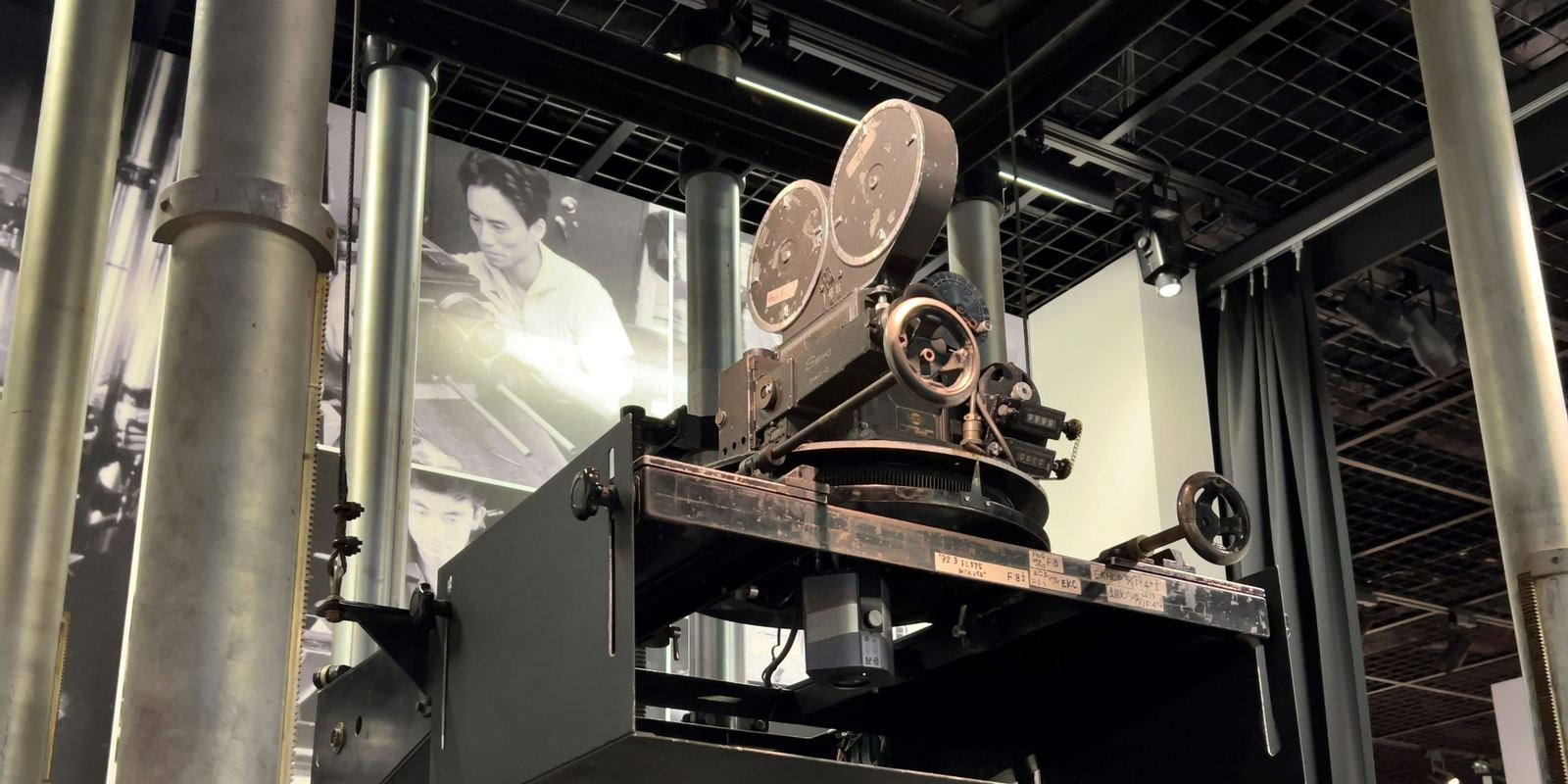
A 35mm animation camera stand: Asanagi, CC0
An illusion of motion
Animation works because our brains blend a fast series of still pictures into continuous movement. Sound films settled on 24 frames per second, a speed fast enough for smooth motion. Animators plan everything in frames: a quick blink might take four frames, a slow head turn twenty-four.
Ones, twos and threes
Animating on ones means a new drawing for every frame, 24 per second, giving very smooth motion for fast action. Most traditional hand-drawn animation is on twos: each drawing is photographed twice, so 12 drawings make a second. It halves the work and still looks fluid. Television animation and much Japanese anime often use threes or even longer holds, mixing in ones for important action. Skilled animators switch between them within a single scene.
Keys and in-betweens
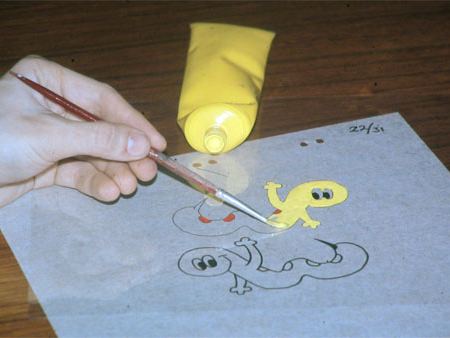
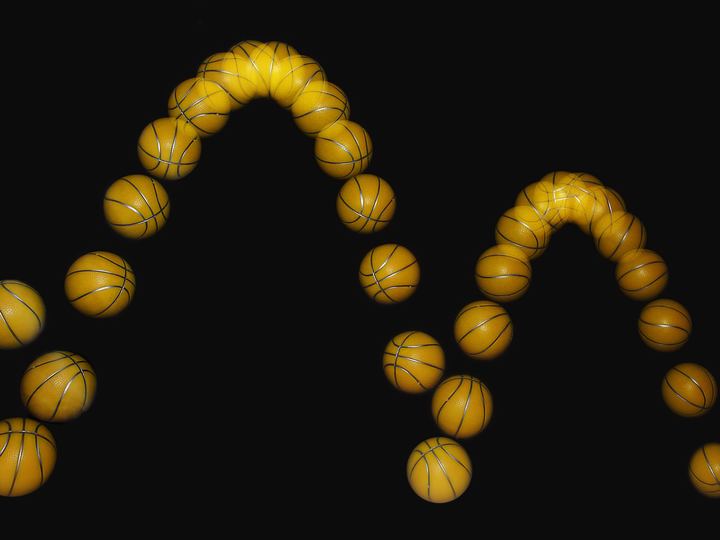
A lead animator draws the key poses, the most important positions in a movement, such as the start, peak and end of a jump. Assistants or in-betweeners then draw the frames in between. Timing charts on the key drawings show how many in-betweens are needed and whether they bunch up near a pose, creating the slow-in and slow-out described in our 12 principles page.
The exposure sheet
The exposure sheet is a grid with one row per frame. It lists which drawing goes on each frame, the dialogue sounds broken down frame by frame for lip sync, and camera instructions. In the days of film, the camera operator followed it exactly, photographing each layer of artwork in order on an animation stand like the one pictured.
In the digital age
Digital software still uses the same ideas: a timeline of frames, keyframes and in-betweens, now sometimes calculated automatically in 3D animation. Many 2D and even 3D productions deliberately animate on twos for style. Try making your own short animation on twos with our beginner lessons, and look up any term in the animation glossary.
Spot it yourself
Next time you watch a cartoon, pause and step through it frame by frame if your player allows. In many hand-drawn films you will see each drawing repeat twice; in fast action you may find a new drawing every frame. In some anime you will notice long held frames with only a mouth or hair moving. Counting frames this way is one of the fastest ways to understand how animators control speed and mood.
Did you know? Before sound, silent films were often shot and shown at slower, less exact speeds, which is why old footage can look sped up today.
- A 35mm animation camera stand: Asanagi, CC0
Text written by Fantastic Cartoon.