Disney's Golden Age of Animation
From Mickey to Snow White and Bambi. How Walt Disney's studio went from a Kansas City start-up to sound cartoons, Technicolor shorts and the first great animated features, 1923 to 1942.
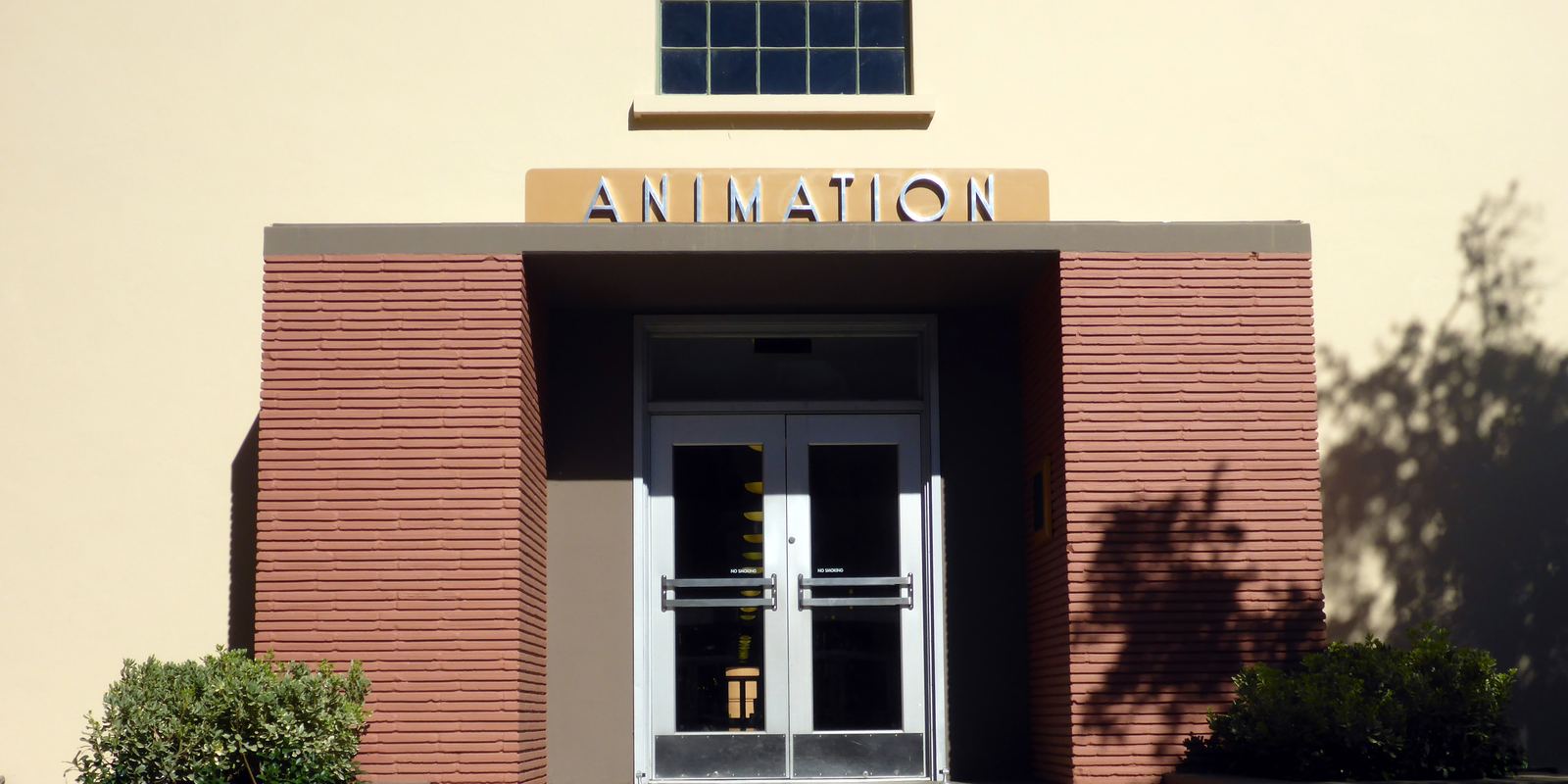
Original Animation Building, Burbank: Coolcaesar, CC BY 4.0
From Kansas City to Hollywood
Walt Disney started his first studio, Laugh-O-Gram, in Kansas City in the early 1920s, working with his friend Ub Iwerks. It went bankrupt, and in 1923 Walt moved to Los Angeles, where he and his brother Roy started the Disney Brothers Studio. Their first series, the Alice Comedies, put a live-action girl into a cartoon world.
A mouse and a soundtrack
After losing the rights to an earlier character, Oswald the Lucky Rabbit, Walt and Ub Iwerks created Mickey Mouse in 1928. Steamboat Willie, released on 18 November 1928, was not the first sound cartoon, but its tight synchronization of music, effects and action made it a sensation. Mickey's earliest version entered the US public domain in 2024.
Silly Symphonies and color
The Silly Symphonies series let the studio experiment with music, mood and new technology. Flowers and Trees (1932) was the first cartoon in full three-strip Technicolor and won the first Academy Award for animated short. Three Little Pigs (1933) and The Old Mill (1937) showed growing skill with character and atmosphere.
Snow White
Many in Hollywood doubted that audiences would sit through a feature-length cartoon. Snow White and the Seven Dwarfs premiered in December 1937 and became a huge success, the first full-length cel-animated feature from an American studio. Walt received an honorary Oscar of one full-size statuette and seven small ones. Pinocchio, Fantasia (both 1940), Dumbo (1941) and Bambi (1942) followed, pushing the art further.
A studio built for animation
Profits from Snow White paid for a new studio in Burbank, opened in 1940, with an Animation Building designed so that departments from story to ink and paint could work together. Walt Disney won 22 competitive Academy Awards in his lifetime, more than anyone else. For the camera that gave these films depth, read our multiplane camera page.
The people behind it
Walt Disney was a story man and producer rather than the main animator after the 1920s. The films relied on a large team, including the group of supervising animators later nicknamed the Nine Old Men, story artists, background painters, and the ink and paint department, staffed largely by women who traced and colored each cel by hand.
Where to start: watch Steamboat Willie (1928), Flowers and Trees (1932), The Old Mill (1937) and Snow White (1937) in order to see a decade of fast progress in sound, color and depth.
- Original Animation Building, Burbank: Coolcaesar, CC BY 4.0
Text written by Fantastic Cartoon.